spacer spacer spacer spacer spacer spacer spacer spacer
spacer
spacer
    Latest Accounting News

Telephone: 03 9727 1244
Facsimile: 03 9727 0244
Email: Email Us

Address: Suite 2, 96 Manchester Rd, Mooroolbark VIC 3138
spacer
Hot Issues
Tips to help you this tax time
Tax Time Checklists Individuals; Company; Trust; Partnership; and Super Funds
ATO warns millions of Australian chasing tax deductions to stop making 'unusual' claims
Impersonation scams are on the rise
Components of a cyber security plan
Social Security Payments and Their Effect on Discretionary Trusts
LRBA ban no better for housing supply or retirement, accountants clap back
The evolution of the world's languages
2026 Year-End Tax Planning Guide – Part 1
2026 Year-End Tax Planning Guide – Part 2
PAYDAY SUPER STARTS 1 JULY 2026 – Planning guides
Payday Super: 6 Things Small Businesses Need to Know
SMEs to be hit hardest by new trust tax reforms
6 tips to help businesses avoid financial difficulties
Managing your mental health and wellbeing during times of uncertainty
Check out what Uses the Most Internet Traffic: Data from 1994 to 2026
Key tax changes and measures from the 2026 Federal Budget
Federal budget 2026: Winners and losers
A breakdown of 2026-27 Federal Budget Themes and Papers.
ATO reminds practitioners to avoid common FBT mistakes
Why every business should have an AI policy
RSM welcomes updated PCG on transfer pricing for inbound distributors
Major super tax changes now law
ATO taking a closer look at investment properties
Choosing the right trustee structure for your SMSF
Succession planning and why it should be at the top of your to-do list
From Bricks to iPhones: The Evolution of the Telephone
Inflation continues to keep SME owners up at night, survey finds
Payday Super: 6 Things Small Businesses Need to Know
ATO issues new guidance on penalties for non-compliance with STP
Strategies for Effective Debt Recovery for Small Businesses
Succession planning to remain major focus for ATO this year
Fringe Benefits Tax (FBT) Guide – Key Checklist & Rates
Buy an existing business
Most Valuable Industries in the World 2026
Articles archive
Quarter 1 January - March 2026
Quarter 4 October - December 2025
Quarter 3 July - September 2025
Quarter 2 April - June 2025
Quarter 1 January - March 2025
Quarter 4 October - December 2024
Quarter 3 July - September 2024
Quarter 2 April - June 2024
Quarter 1 January - March 2024
Quarter 4 October - December 2023
Quarter 3 July - September 2023
Quarter 2 April - June 2023
Quarter 1 January - March 2023
Quarter 4 October - December 2022
Quarter 3 July - September 2022
Quarter 2 April - June 2022
Quarter 1 January - March 2022
Quarter 4 October - December 2021
Quarter 3 July - September 2021
Quarter 2 April - June 2021
Quarter 1 January - March 2021
Quarter 4 October - December 2020
Quarter 3 July - September 2020
Quarter 2 April - June 2020
Quarter 1 January - March 2020
Quarter 4 October - December 2019
Quarter 3 July - September 2019
Quarter 2 April - June 2019
Quarter 1 January - March 2019
Quarter 4 October - December 2018
Quarter 3 July - September 2018
Quarter 2 April - June 2018
Quarter 1 January - March 2018
Quarter 4 October - December 2017
Quarter 3 July - September 2017
Quarter 2 April - June 2017
Quarter 1 January - March 2017
Quarter 4 October - December 2016
Quarter 3 July - September 2016
Quarter 2 April - June 2016
Quarter 1 January - March 2016
Quarter 4 October - December 2015
Quarter 3 July - September 2015
Quarter 2 April - June 2015
Quarter 1 January - March 2015
Quarter 4 October - December 2014
COVID-19 disaster payments to be tax-free: Prime Minister Scott Morrison


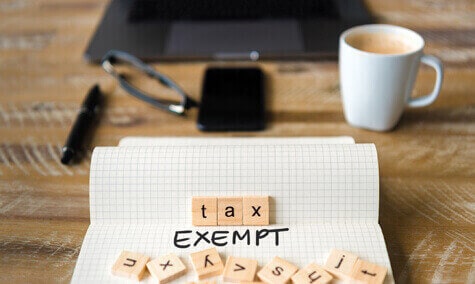
Prime Minister Scott Morrison has declared that COVID-19 disaster payments will now be tax-free, a policy change that will have ramifications for accountants and their clients, say tax experts.


Mr Morrison told ABC Radio on Thursday morning that the federally funded income support scheme would now provide tax-free payments of $750 a week to workers who lose 20 or more hours of work a week, and $450 a week to those who lose between eight and 20 hours.


The PM then stressed his point on Seven Network’s Sunrise, stating, “I’ve made that very clear this morning, back through the system, they won’t be taxable. JobKeeper, by the way, was.”


Mr Morrison’s position comes despite the Treasury, the ATO and Services Australia all publicly noting that COVID-19 disaster payments are taxable income.


A Treasury official told Accountants Daily that a policy change had indeed been made and that the Treasury was in the process of updating its guidance as of Friday morning.


A legislative change is unlikely to be required, given the COVID-19 disaster payment is authorised under regulations issued by the Governor-General rather than through legislation.


The Institute of Public Accountants general manager of technical policy, Tony Greco, said granting the $750 a week payment with a tax-free status would mean workers will take home more than they did under the original JobKeeper program.


Disaster payment recipients can expect to be better off by $90 a week compared with the JobKeeper wage subsidy, based on an annualised $39,000 income of $750 each week.


“The main concern is that these payments have always been stated as assessable, so now there’s confusion,” said Mr Greco. “It is a significant shift in treatment from what people have been told and what we have come to expect.


“This is a seismic shift in the tax treatment for recipients and a windfall which will come at a huge cost to the taxpayer.”


Michael Croker, tax leader at Chartered Accountants Australia and New Zealand, said the policy change would come at a bigger cost to taxpayers and open up questions around the taxable status of payments made since 3 June — the day the COVID-19 disaster payment was announced.


“Tax policy wonks will be concerned about the so-called income and substitution effects,” said Mr Croker.


“Within the hard-hit NSW business community, the new policy will be factored into the question often put to accountants: ‘Is it better to stand down workers, lower business labour costs and send them to Services Australia for the COVID-19 disaster payment?’.


“For some low-paid workers, $750 tax-free a week could even be a temporary pay rise, an outcome at odds to the take-home pay of a comparable employee still on the business’s payroll.”


According to Mr Morrison, more than $490 million in COVID-19 disaster payments have been paid to over 955,000 workers in NSW and Victoria.


The payments, which were increased on Wednesday from $600 to $750 a week for workers who lost more than 20 hours, and raised from $450 from $375 for those who lost between eight and 20 hours, are expected to cost the federal government $750 million a week.


Jotham Lian 
30 July 2021
accountantsdaily.com.au


30th-August-2021
 
sitemap | site by AcctWeb